Showing posts with label REPRESENTATION. Show all posts

Wednesday, 6 May 2020

Music Video Essay

Music Video Essay


Explain how representations in music videos are chosen to promote the artist(s). Refer to one of the music videos you have studied to support your answer. [10] 


A good demonstration of the use of representation to promote an artist is Corrine Bailey Rae’s music video for her song ‘Where You Are’. The video is centred around the CBR discovering people who are dealing with hardships and empowering them to be themselves and be happy. Bailey Rae is portrayed as a guardian angel for those who are judged and oppressed. 
    This can be seen in the multiple mid shots of CBR, in which the angle is lowered to portray her as powerful. A natural backlight using the sunlight from the location has been used to create a halo effect around Bailey Rae, whilst also separating her from the background. This imagery connotes the idea of a biblical being, whether that be a saint, angel, or the lord himself. They have all been drawn with a heavenly light surrounding them. The foreground is dimly light highlighting the halo image as well as conveying the message that she can bring light (happiness) from the darkness (hard times). Therefore, this promotes CBR as a champion of the people using the power of her music to do good for the general public.
     Another scene also represents Bailey Rae as a powerful person. This long shot has again been taken from a low angle, in the scene a group of teenagers are running with angry expressions on their faces. CBR lifts her arms and the teenagers slow down whilst she continues to move at a regular pace, whilst she sings the lyrics “Stop where you are…”. The slow motion editing here paired with the unedited clip or CBR creates the effect that she is able to slow down time in order to let them calm down and enjoy the moment, this is the same message that the lyrics convey. The use of teenage actors of all different ethnicities also shows that she is willing to help everyone using her music regardless of racial identity. It also shows that grief and sadness does not discriminate, everyone has something to feel negatively about. These messages combined promotes CBR as a woman who understands that despite cultural divides we are all in need of help in our own lives.

    One scene that excludes CBR however still manages to positively promote her using representation is in the last third of the video.It shows a young boy standing on the roof of a building, the shot is a long shot at an extremely low angle. The buildings shape gives an interesting symmetry, It is reminiscent of the shape of a thrown, the symmetry also allows the young black boy to become the focal point of the shot. This makes the boy appear powerful and ominous. It shows he is the king of his world, he has power over his own life, (another message shown in the lyrics). The representation of the black child as a king is a countertype and goes beyond the hegemony of today’s society. In turn this promotes CBR as an advocate endorsing different ethnicities or even different aged people in the powerful positions of the world rather than the usual hegemonic group.

(Was orginally on my music video google slide however, it is easieer to find if I post it seperatly)

Monday, 23 March 2020

The Big Issue

The Big Issue

Key Terms:
Circulation = number of copies a magazine sells
Readership = total mass number of those who like to read it
Mass Audience = readership on a very large scale 
Niche Audience = narrow group of readers with particular interests
Subscription = a reader pays for copies at set interval with low prices

Masthead = title of magazine

Plug = text that 'plugs' a feature inside
Puff = a story that is given prominence on the cover
Cover Star = 'star' featured on cover
Anchorage text = text that gives image meaning
Banner = text that runs across the lower section
Skyline = text that runs across the top section


Advertisements

70% of income through advertising.
Small circulation magazines depend more on advertising.

The Big Issue

  • Most circulated street newspaper.
  • Hybrid genre (social business and entertainment) 
  • Entertainment attracts ad revenue
  • Editorial content, critical of big businesses, banking and champions the political cause and role  of the individual in society.
  • £2.50, £1.25 to trader. 
  • 2000 vendors
  • 200< mill copies sold. 
  • Inspired a network of 120 similar magazines
  • Primary objective
  • Independent publication, offer public service, solve social issues
First published in 1991, The Big Issues tend to use the "David and Goliath" narrative and is often criticised for their flashy commercial style for street newspaper. John Bird and Gordon Roddrick's initial goal was to give the homeless a legitimate way of earning money. John Bird MBE remains the editor in chief, he continues to write a column in the back of the magazine.

Bird was homeless at 5, in orphanages at 7 till 10, had a spell in prisons as a teen, slept in the streets of London till his late 20's. He also launched The Big Issue Foundation. The Body Shop donated £25000 to The Big Issue for its initial launch. They sold 300,000 copies in 2001. Sales declined so they relaunched with a new look and columnist Joey Barton. Most vendors are homeless males 18 -56.

"Ethical Capitalism" - John Bird 

Ethical Definition 
- relating to moral principles or the branch of knowledge dealing with these.

Capitalism Definition
- an economic and political system in which a country's trade and industry are controlled by private owners for profit, rather than by the state. 


Analyse Tips

Language:                         Representation:                                      More Language:
Intertextuality                   DRCAGES               SOCIAL                Font
CLAMPS                          People                                                    Institutional Information
Camera                              Places                      POLITICAL          Price
Layout                               Ideas                                                       Bar Codes
Mise en scene                                                    CULTURAL          Power of words
Images / Graphics                                                                             Logo
Content                                                                                         
Colour
Title / Words and Phrases


Monday, 16 December 2019

Newspaper Audiences Homework

Newspaper Audiences 

The i:

The i newspaper is a concise compact quality tabloid and their news stories are without as much bias as possible. Therefore, suggests the target audience are most likely fillers that want quality hard news, people who want to make an informed decision themselves on want they think. Also based on their target audience statistics the i is mostly read by millennials.  This relates back to the physcographic of fillers. Millennials tend to be fillers as opposed to any other news physcographic. It is the 10th most popular newspaper amongst the age group.

Based on the advertisements published in The i, for example the Hertz luxury car hire advert on their website, we can infer that the i is targeted towards the A/B/ C1 demographics. However, the advertisement by McDonald’s contradicts this thought. Perhaps the i is aimed at university students as they tend to be avid lovers of fast food within the millennial age range. They fit the A / B / C1 demographic as well as the age range associated with the i’s content.  Luxury holidays are also advertised in their print newspaper, perhaps for gap years? Or for group holidays that are common amongst university students.


On a political stand point, the average reader of the i could be either right or left wing. The i’s political views remain as unbiased as possible. On the other hand, you could say they advocate for centralism, and therefore their readers would most likely be central themselves on the political scale. Parties such as the Liberal Democrats have a predominately central ideology.  

Wednesday, 16 October 2019

Representation

https://drive.google.com/file/d/18-7z2OD6VQi3IOKjoRA_ETeoQtFIol5Y/view?usp=sharing

Tuesday, 1 October 2019

Representation

Representation


Disability
Regionalism
Class
Age
Gender
Ethnicity
Sexuality


Stereotype = Media uses stereotypes as visual shortcuts, it is easy for the audience to understand. They are repeated so often that people often believe they are normal and a true representation of that specific group of people.

Archetypes = The 'Ultimate' stereotype.

Counter-type = Goes against traditional stereotypes.

For example:
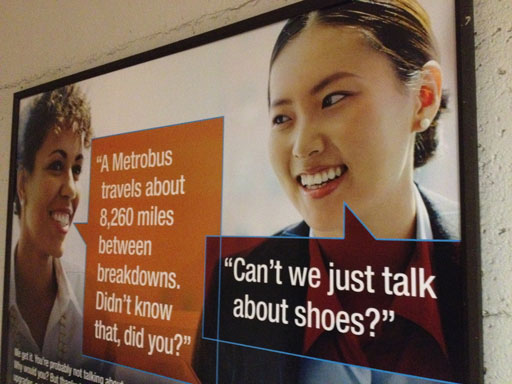
All women are airheads that think about artificial subjects like shopping, their hair and their body. Their only purpose is to fawn over the male species. There are many forms of media that represent women this way.


Image result for metro bus sexist ad

Another stereotype in media is that transgender woman is a deceitful character and changes genders to deceive the straight male. Like in Ace Ventura Pet Detective the antagonist is pretending to be a woman in order to commit criminal acts.

A counter-type of this is the new series Pose, in which we see the hardships of gay men and transgender women during the aids epidemic in New York.